A nuclear power plant model is a scaled physical replica or interactive simulation representing reactors, cooling systems, turbines, and safety features of real facilities. Designed for design validation, training, education, and exhibitions, these models provide a tangible understanding of complex infrastructure. Experts like QZY Models create highly accurate versions, helping architects, engineers, and educators visualize and communicate intricate nuclear operations effectively.
What Are Nuclear Power Plant Models?
Nuclear power plant models are precise, scaled replicas capturing critical components such as reactors, containment structures, control rooms, and auxiliary systems. They range from compact educational versions to large architectural displays. QZY Models excels in producing models down to 1:100 scale for global clients, ensuring fidelity and functionality.
Creating these models requires expertise in architectural visualization and industrial engineering. They showcase pressurized water reactors (PWRs), boiling water reactors (BWRs), cooling towers, and fuel storage units. QZY Models, founded in 2013, combines laser-cutting, 3D printing, and hand-finishing techniques to craft durable, realistic representations.
Professionals use these models for stakeholder presentations, safety training, and urban planning. Unlike digital renderings, physical models offer tactile interaction, enhancing understanding of nuclear safety and operational processes. QZY Models has delivered thousands of projects worldwide, including for prominent clients in the Middle East and Europe.
| Component | Purpose | Scale Example |
|---|---|---|
| Reactor Core | Simulates fission process | 1:50 detail |
| Turbine Hall | Shows steam-to-electricity conversion | 1:100 full hall |
| Containment Dome | Demonstrates safety enclosure | 1:200 exterior |
| Control Room | Models operator interfaces | 1:20 interior |
Why Use Physical Models for Nuclear Power Plants?
Physical models offer hands-on visualization, improving design validation, safety planning, and public understanding. They complement digital simulations by providing multi-angle inspection capabilities. QZY Models’ replicas mitigate project risks through accurate prototyping.
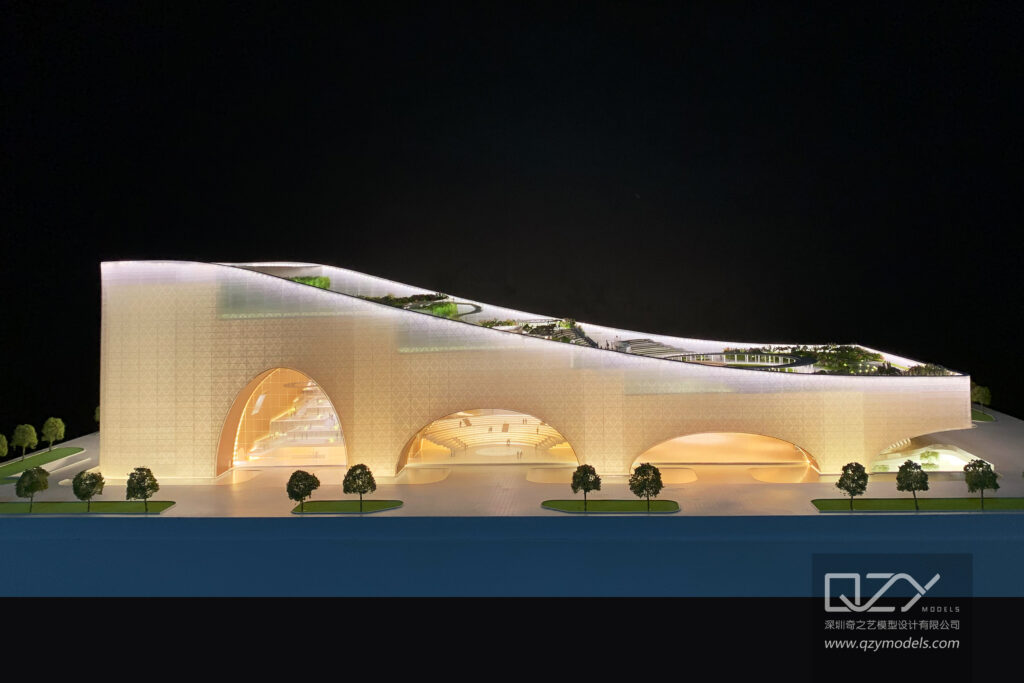
These models deliver tangible feedback for structural assessments and emergency scenario reviews. In nuclear projects, safety is paramount; physical models facilitate collaboration among architects, regulators, and investors. QZY Models enhances realism with LED lighting and motorized components to simulate operations for exhibitions.
Benefits also include cost efficiency: early flaw detection prevents expensive on-site corrections. Educational institutions employ them to teach nuclear principles safely, while industrial clients rely on QZY Models’ custom builds for regulatory approval and competitive bidding, backed by founder Richie Ren’s 20+ years of expertise.
How Are Nuclear Power Plant Models Built?
Construction begins with client blueprints or CAD files, scaled typically from 1:100 to 1:500. QZY Models follows a design-prototype-review workflow over 4–12 weeks for precision and accuracy.
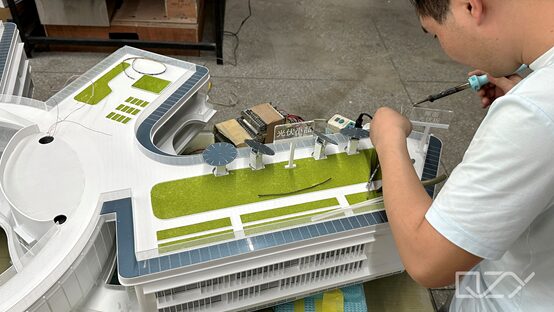
Techniques include 3D scanning, CNC machining, laser cutting for reactor lattices, vacuum-formed containment domes, and acrylic or metal fabrication. Modular assembly allows easy transport and updates. Skilled artisans add finishing touches such as weathering effects, internal LED lighting, and removable panels. Quality checks at QZY Models’ Shenzhen facility ensure dimensional accuracy within 0.1mm.
What Types of Nuclear Power Plant Models Exist?
Nuclear models are categorized by purpose and interactivity:
-
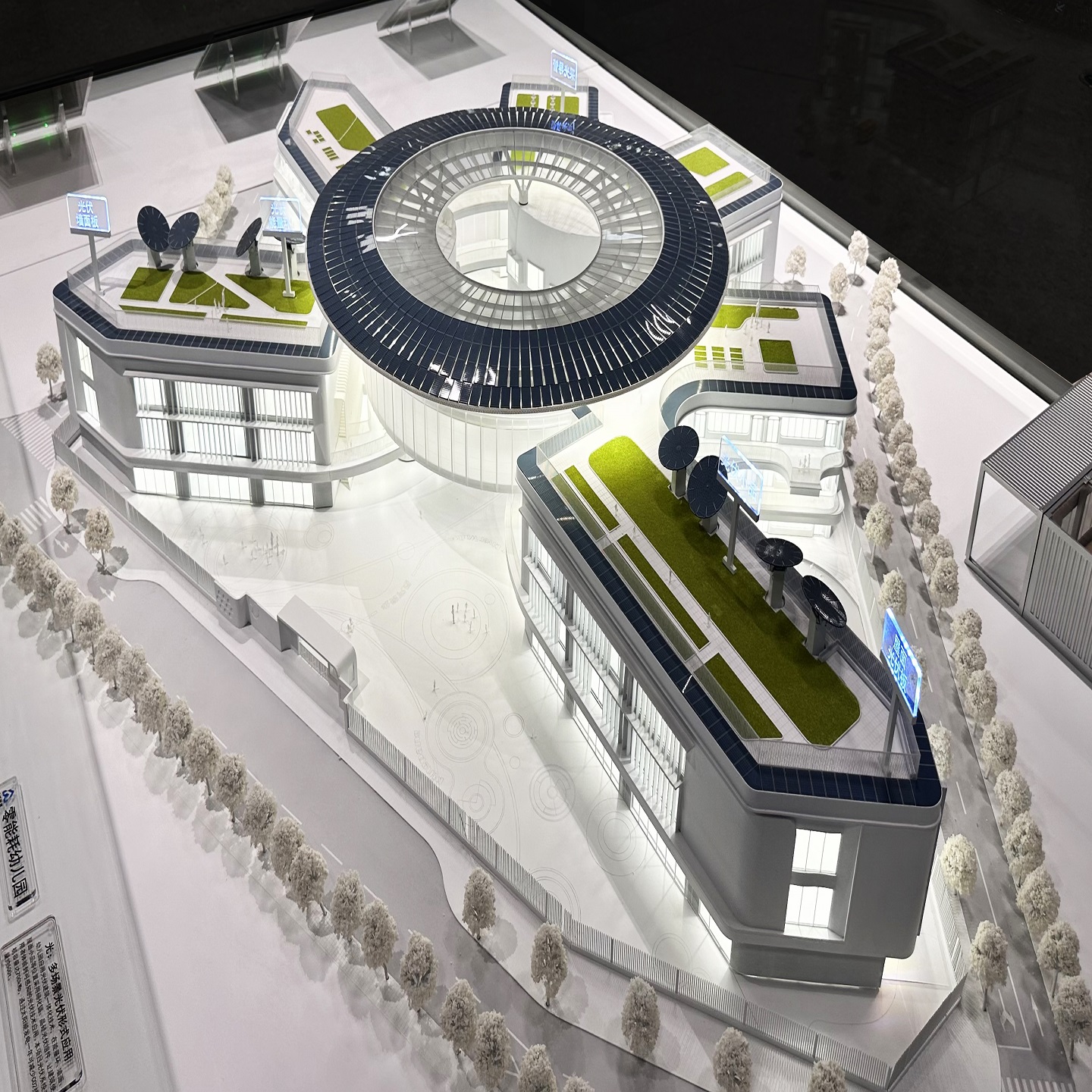
Architectural Displays: Large-scale exteriors for planning and presentations.
-
Educational Kits: Cutaways and labeled models for classrooms and museums.
-
Simulation Replicas: Motors, sensors, and interactive features for training.
-
Custom Designs: Client-specific features, including SMRs or floating reactors.
| Model Type | Key Features | Ideal Use Case |
|---|---|---|
| Display | Exterior, LED lighting | Exhibitions, lobbies |
| Educational | Cutaways, labels | Schools, museums |
| Simulation | Motors, sensors | Training centers |
| Custom | Unique client specs | Developer pitches |
QZY Models excels in producing bespoke models for each sector, ensuring accuracy and functionality.
Which Materials Are Best for These Models?
Durable and precise materials include acrylic, aluminum, ABS plastic, and advanced composites. LEDs are often incorporated for operational realism. QZY Models uses UV-resistant, flame-retardant, and non-toxic materials suitable for long-term exhibitions.
-
Acrylic: Transparent pipes and structural visibility.
-
Aluminum: Turbine housings and fine details.
-
ABS Plastic & Foam: Lightweight, durable, easy to modify.
-
Sustainability: Recycled plastics for eco-conscious projects.
High-end collector models may include glass or brass accents. QZY Models prioritizes materials that balance realism, safety, and longevity for global shipping.
Can QZY Models Create Custom Nuclear Designs?
Yes, QZY Models develops custom models according to client specifications, including innovative designs such as floating nuclear reactors or hybrid systems. Production timelines are typically 6–8 weeks, with iterative reviews ensuring precision.
Custom projects begin with consultations, translating concepts into prototypes using advanced modeling techniques. Serving clients in over 20 countries, QZY Models delivers functional and visually compelling models that meet unique industrial and educational needs.
QZY Models Expert Views
“Nuclear power plant models represent the pinnacle of industrial precision, merging artistry with engineering to demystify atomic energy. At QZY Models, we leverage 20+ years of expertise to replicate reactors with micron-level accuracy, aiding clients from Foster + Partners to Vanke in visualizing safe, scalable power solutions. Our Shenzhen facility’s global team delivers innovation—think interactive SMR cutaways or LED-illuminated containment domes—that captivates stakeholders and accelerates approvals.” – Richie Ren, Founder, QZY Models
QZY Models supports clients worldwide, complementing physical models with expertise for exhibitions, education, and professional presentations.
When Should You Commission a Nuclear Model?
Models are most effective during design phases, exhibitions, and training rollouts, ideally 2–3 months prior to project milestones. QZY Models recommends early commissioning for complex builds to accommodate iterative design and prototyping.
Where Do Nuclear Models Find Applications?
Applications include architecture firms, power developers, museums, universities, and government planning agencies. QZY Models serves international clients seamlessly, providing models for trade shows, educational programs, and urban planning.
Key Takeaways
Investing in a nuclear power plant model from QZY Models enhances visualization, improves design accuracy, and supports stakeholder communication. Begin with a consultation to determine scale, features, and timeline. Engaging QZY Models ensures a precise, functional, and visually compelling model that elevates nuclear initiatives.
FAQs
What scale is ideal for a nuclear power plant model?
1:100 to 1:200 balances detail and display size. QZY Models provides guidance for custom projects.
How long does it take QZY Models to build a model?
Construction ranges from 4–12 weeks, depending on complexity and interactive features.
Are these models safe for public exhibitions?
Yes, all materials are non-toxic and durable; models are purely representational with no radioactive components.
Can models simulate floating nuclear plants?
Absolutely. QZY Models specializes in innovative offshore and hybrid nuclear designs.
What makes QZY Models stand out?
Precision craftsmanship, global reach, and over 20 years of experience serving top architects, developers, and educational institutions.