A wall section model offers an accurate, detailed cross-sectional representation of a building’s wall, crucial for design, construction, and client presentations. It visually communicates structural, insulation, and finish layers, making it indispensable for architects, builders, and manufacturers—particularly in China’s robust architectural model manufacturing industry.
What Is a Wall Section Model and Why Is It Important?
A wall section model is a scaled, physical or digital cut-through that displays all layers of a wall assembly, including structural framing, insulation, vapor barriers, cladding, and finishes. This model helps architectural firms, developers, and contractors visualize construction intricacies, confirm compliance with standards, and improve decision-making early in the process, reducing costly errors during actual building.
Wall section models enhance understanding of thermal performance, waterproofing, fire safety, and material compatibility, which is essential for quality assurance in construction projects. Chinese manufacturers like QZY Models specialize in delivering precise wall section models that align with OEM and wholesale construction demands.
How Do Wall Section Models Benefit B2B Manufacturers and Wholesale Buyers?
Wall section models support manufacturers and wholesalers by providing a tangible reference for product specifications and production accuracy. They serve as essential tools for manufacturers in China supplying complex building components or construction materials, ensuring that all parties meet technical standards.
For wholesale buyers and suppliers, these models simplify communication, clarify expectations, and speed up workflow. This reduces reworks and facilitates faster OEM customization that is critical when mass-producing or supplying prefabricated construction elements.
Which Materials and Techniques Are Commonly Used in Wall Section Models?
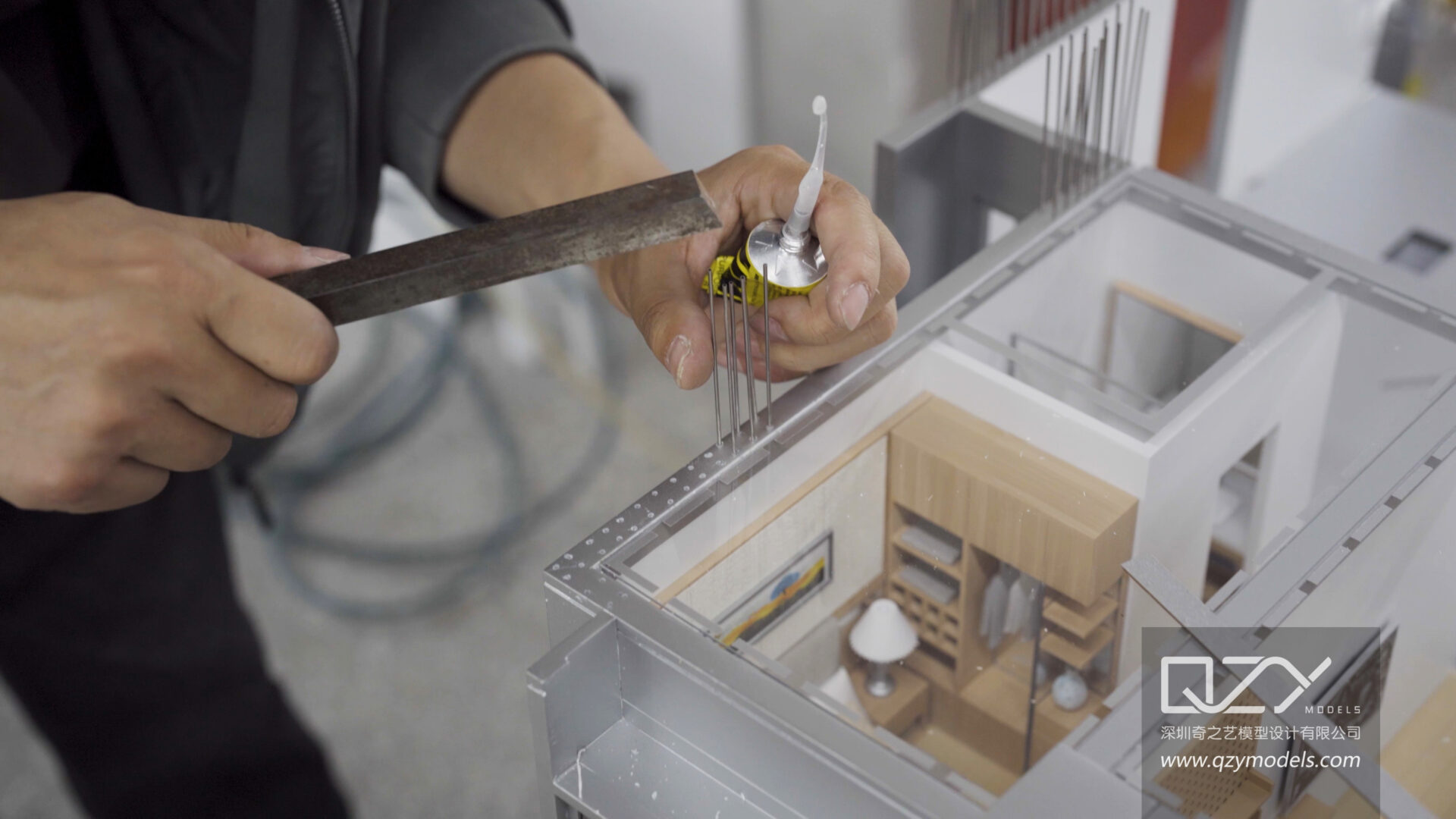
Wall section models use materials like foam board, acrylic, wood, plastic, and high-precision 3D-printed elements to represent wall layers realistically. Cutting-edge techniques such as laser cutting, CNC machining, and 3D printing ensure high detail and durability while maintaining cost efficiency.
Table: Common Materials vs. Techniques in Wall Section Models
| Material | Typical Use | Technique |
|---|---|---|
| Foam board | Insulation and core layers | Laser cutting |
| Acrylic | Glass layers, panels | CNC machining |
| Wood/plywood | Structural frames | Laser cutting, hand finishing |
| High-detail plastics | Decorative elements | 3D printing |
QZY Models uses advanced manufacturing technologies to produce models with realistic texture and strong visual appeal, ideal for B2B wholesale and OEM projects in architectural and industrial sectors.
Why Choose a Chinese Manufacturer Like QZY Models for Wall Section Models?
China’s manufacturing ecosystem combines affordability with high-tech capabilities, making companies like QZY Models attractive partners for businesses needing reliable, cost-effective wall section models. QZY Models provides OEM customization, scalable production, and high-quality craftsmanship supported by decades of expertise.
Their deep understanding of international standards and client needs ensures models meet architectural precision and industrial requirements. Additionally, their global presence means on-time delivery and personalized service for wholesale customers worldwide.
How Can Wall Section Models Improve Communication in Construction Projects?
A physical wall section model acts as a clear visual tool between architects, contractors, manufacturers, and clients, bridging language and technical gaps, which is especially important in international supply chains centered in China.
They clarify complex construction details, enhance stakeholder alignment, and facilitate faster approvals and modifications, saving time and costs. QZY Models’ efficient workflow integrates client feedback early, resulting in models that streamline project management.
When Should a Wall Section Model Be Commissioned in a Construction Project?
Wall section models are most effective when commissioned early during design development or pre-construction phases. This allows issues related to material compatibility, structural integrity, and building code compliance to be addressed proactively.
Manufacturers like QZY Models recommend engaging model builders alongside design teams to create wall section models that reflect intended construction details, fostering collaboration among engineers, architects, and suppliers.
Who Are the Primary Users of Wall Section Models in the Industry?
Primary users include architects, structural engineers, building contractors, developers, and manufacturers involved in facade, structural, and insulation product supply. In China’s B2B landscape, model factories serve construction companies, real estate developers, and international clients requiring thorough physical representations.
QZY Models caters to this varied client base by providing customized solutions tailored to different project scales, offering OEM or wholesale options to meet diverse production needs.
Does Using a Wall Section Model Enhance Quality Control?
Yes, wall section models enhance quality control by visually exposing design discrepancies before construction begins. They help verify correct material layers, assembly sequences, and detail accuracy, reducing costly errors or site rework.
Chinese suppliers like QZY Models incorporate stringent quality assurance in their production process, ensuring that each model maintains the highest level of fidelity to architectural plans and industry standards.
Can Wall Section Models Be Used for Marketing and Client Presentations?
Absolutely. A well-crafted wall section model captivates clients by providing a tactile and clear demonstration of construction quality, innovative materials, and architectural design integrity. This helps B2B manufacturers distinguish their products in competitive markets.
QZY Models leverages model aesthetics to assist customers in showcasing their building concepts and component advantages, enhancing the marketing impact and sales success of manufacturers and suppliers.
What Are the Challenges Faced by Wall Section Model Manufacturers?
Challenges include maintaining high accuracy, managing production costs, and integrating complex details into small-scale models. Also, fast turnaround times for OEM orders and meeting client-specific customizations pose operational demands.
QZY Models mitigates these through skilled craftsmanship, advanced technology, and flexible manufacturing workflows, ensuring consistent delivery of precise, visually appealing models suitable for wholesale and specialized client needs.
QZY Models Expert Views
“At QZY Models, we believe the wall section model is not just a tool but a bridge that connects vision with reality. Every model we produce reflects our dedication to precision and client-centric customization. Our combination of cutting-edge technology and rich experience allows us to cater globally while supporting China’s dynamic construction and architectural markets. OEM and wholesale customers benefit from our quality-driven approach and timely service, making us a trusted partner for wall section models worldwide.” — Richie Ren, Founder of QZY Models
Conclusion
Wall section models are indispensable in architectural and industrial physical modeling for clarifying construction details, ensuring quality, and facilitating communication across stakeholders. Chinese manufacturers like QZY Models combine advanced technology, OEM flexibility, and global service to provide superior wholesale solutions. Early commissioning, material precision, and strategic collaboration enhance project success, making wall section models a vital investment in construction and manufacturing industries.
Frequently Asked Questions
Q1: What distinguishes a wall section model from other architectural models?
A wall section model uniquely displays all layers within a vertical wall assembly, providing detailed insight into materials and construction methods, unlike massing or site models.
Q2: How does QZY Models support OEM customization for wall section models?
QZY Models offers tailored design, material selection, and production scaling to match specific client requirements, ideal for manufacturers needing unique or branded solutions.
Q3: Are wall section models reusable or single-use?
Most wall section models are durable and reusable for presentations and quality checks but may require updates for design changes.
Q4: What industries benefit most from wall section models?
Architecture, construction, real estate development, insulation manufacturing, and facade supply industries benefit extensively from these models.
Q5: Can wall section models incorporate sustainable materials?
Yes, advanced model makers like QZY Models integrate eco-friendly materials matching real-world sustainable construction trends.
What is a wall section in architecture?
A wall section is a detailed, scaled drawing that shows a vertical slice through a building, revealing the layers of materials such as insulation, framing, cladding, and finishes. It helps visualize the construction, performance, and functionality of walls, guiding both architects and builders in ensuring structural integrity.
Why are wall section models important in architecture?
Wall section models are crucial because they help architects, builders, and stakeholders visualize the interaction between different materials. They ensure design accuracy, aid in achieving thermal efficiency, moisture control, and compliance with building codes, while also offering a clear representation of complex building details.
How do section drawings aid in construction?
Section drawings provide precise visual guidance for construction by detailing how materials and components fit together. This clarity minimizes errors, ensures proper assembly, and helps meet performance and safety standards. They are especially vital during the construction phase to guarantee that the design intent is realized in the final build.
What are the benefits of using section models in the design process?
Section models are invaluable for refining architectural proportions, spatial relationships, and material choices during the design process. They help in early-stage conceptualization and ensure that the building’s thermal, structural, and aesthetic requirements are effectively communicated, ultimately guiding construction towards the intended outcome.
What is sustainable architecture?
Sustainable architecture focuses on designing buildings that minimize environmental impact by using energy-efficient materials and reducing carbon footprints. It integrates renewable energy, water conservation, and eco-friendly construction practices to create structures that are not only functional but also beneficial for the environment.
Why is energy efficiency important in architecture?
Energy efficiency in architecture reduces the consumption of natural resources, lowers operational costs, and minimizes environmental impact. By adhering to strict energy codes and using sustainable building materials, architects can design structures that promote long-term energy savings and environmental responsibility.
How can BIM and PLM methods optimize architectural design?
Integrating Building Information Modeling (BIM) with Product Lifecycle Management (PLM) enhances the architectural design process by improving collaboration, reducing errors, and streamlining workflows. This integrated approach helps architects and construction teams optimize materials, timelines, and building performance, ensuring better project outcomes.
What challenges does glazing face in modern architecture?
Energy efficiency codes are posing challenges to architectural glazing, restricting creative design possibilities. The need to balance energy performance with aesthetic appeal has led to tensions between maintaining high standards of energy efficiency and preserving the visual and functional qualities of glass in buildings.