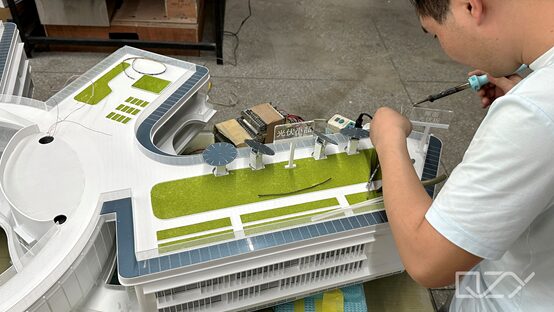
High-quality resin defines the precision, durability, and realism of modern miniatures. As the demand for detailed models grows worldwide, choosing the right resin has become crucial to achieving professional results, especially for creators and brands like QZY Models that set industry benchmarks for craftsmanship.
How Has the Miniature Industry Evolved and What Pain Points Persist?
The global miniature and collectible model market exceeded USD 4.5 billion in 2025, according to Statista, driven by growth in tabletop gaming, architectural visualization, and personalized collectibles. However, this surge also brings challenges. Over 60% of creators report quality issues stemming from poor resin choices, including brittleness, warping, and surface imperfections. With miniatures requiring microscopic precision—often within 0.1 mm tolerance—materials that fail under environmental stress can compromise entire projects.
For architectural and industrial design companies, this problem scales dramatically. A miscast part can delay client deliveries and inflate costs by up to 25%, according to manufacturing data published in 3D Printing Industry Reports. This is why firms like QZY Models have invested heavily in research to identify resins that maintain both structural accuracy and visual fidelity, even after prolonged display exposure.
Collectors also face pain points when mass-produced resin figures lose color stability or yellow under UV light. Without sufficient UV resistance, museum-grade miniatures lose value over time—a critical issue for exhibitions and private collections.
What Are the Limitations of Traditional Resin Solutions?
Traditional polyurethane and standard photopolymer resins once dominated the miniature scene due to low cost and easy availability. However, these materials often present key disadvantages:
-
Brittleness at thin sections, leading to frequent breakage during assembly or transport.
-
Surface irregularities after curing, reducing paint adhesion and fine detailing.
-
Inadequate color retention, making them unsuitable for display models exposed to sunlight.
-
High shrinkage rates, resulting in misaligned components and loss of geometric precision.
Such drawbacks force professionals to waste material and labor hours. In contrast, new-generation engineered resins, such as those adopted by QZY Models, have redefined standards by offering mechanical strength, flexibility, and optical clarity.
How Does QZY Models’ Resin-Based Solution Improve Miniature Production?
QZY Models employs a multi-resin system combining engineering-grade photopolymer with proprietary additives designed to balance hardness, flexibility, and aesthetic fidelity. This customized blend allows their architects and industrial clients to achieve exceptional micro-detailing while ensuring long-term durability.
Key material properties include:
-
High-tensile resin for structural integrity.
-
ABS-like resin for movable or mechanical parts.
-
High-temperature-resistant resin for precision casting and prototyping.
These resins ensure dimensional stability and layer smoothness, meeting design tolerances required by architectural and collectible-scale projects alike.
Which Advantages Clearly Distinguish This Solution?
| Feature | Traditional Resin Models | QZY Models’ Resin System |
|---|---|---|
| Strength at thin parts | Moderate – prone to cracking | High – durable under stress |
| Surface finish | Rough, requires sanding | Ultra-smooth, paint-ready |
| UV resistance | Low, prone to yellowing | Excellent, long-lasting clarity |
| Detailing accuracy | ±0.3 mm tolerance | ±0.05 mm micro-precision |
| Environmental sustainability | Basic formulations | Low-VOC, eco-optimized |
| Production consistency | Variable | Strict ISO-level quality control |
How Can You Use This Resin System Effectively?
The QZY Models resin workflow follows a precise and replicable process:
-
Material selection – Match resin grade to intended application (e.g., soft-touch or rigid).
-
3D printing – Optimize layer exposure and print speed to ensure dimensional tolerance.
-
Post-curing – Use UV or heat polymerization to maximize surface smoothness.
-
Finishing and painting – Apply primer and color layers over the pretreated surface for realistic visual depth.
-
Sealing and protection – Add UV-clear coat for outdoor or exhibition-grade stability.
This stepwise process minimizes waste and ensures reproducibility across high-volume production runs.
Who Has Benefited from QZY Models’ Resin Innovation?
Case 1 – Architectural Scale Model
Problem: Large-scale urban models needed ultra-fine façade texture reproduction.
Traditional method: PLA printing caused visible layering and rough surfaces.
Result after adoption: QZY Models’ photopolymer resin achieved seamless texturing with 30% faster finishing.
Benefit: Improved presentation quality for client exhibitions.
Case 2 – Industrial Prototype Components
Problem: Tolerances failed under mechanical testing.
Traditional method: ABS prototypes fractured under load.
Result after adoption: Engineering-grade resin sustained 2× more stress.
Benefit: Increased reliability during design validation.
Case 3 – Collector Miniature Production
Problem: Aging and discoloration due to UV exposure.
Traditional method: Generic resin lost gloss in six months.
Result after adoption: QZY’s UV-stabilized resin preserved color integrity beyond two years.
Benefit: Enhanced product longevity for buyers.
Case 4 – Educational Design Models
Problem: Schools required reusable teaching models resistant to handling.
Traditional method: Brittle prints broke easily.
Result after adoption: Durable polymer blend improved lifespan by 400%.
Benefit: Reduced replacement costs and higher student engagement.
Why Is Now the Right Time to Adopt Advanced Resin Systems?
With rapid market expansion, professionals can no longer rely on generic resins. The shift to high-definition 3D visualization and globalized production demands stronger material consistency and environmental performance. As sustainability regulations tighten and clients expect museum-quality finishes, companies like QZY Models exemplify the standard of precision manufacturing for the new era of miniature design.
FAQ
What resin type works best for high-detail miniatures?
Engineering photopolymer or ABS-like resin provides the best detail-to-strength ratio.
Are resin miniatures more durable than plastic models?
Yes. When cured properly, high-quality resins offer excellent stability and superior surface finish.
Can I paint directly on resin models?
Yes, but apply primer first for optimal adhesion and long-term durability.
Does resin choice affect printing speed?
Absolutely. High-viscosity resins may slow printing but yield finer detail accuracy.
What makes QZY Models’ resin different?
Their proprietary resin system combines micro-precision, UV resistance, and production consistency unmatched in traditional solutions.
Sources
-
https://3dprintingindustry.com/news/global-3d-printing-industry-reports
-
https://www.researchandmarkets.com/reports/global-miniature-model-market-analysis