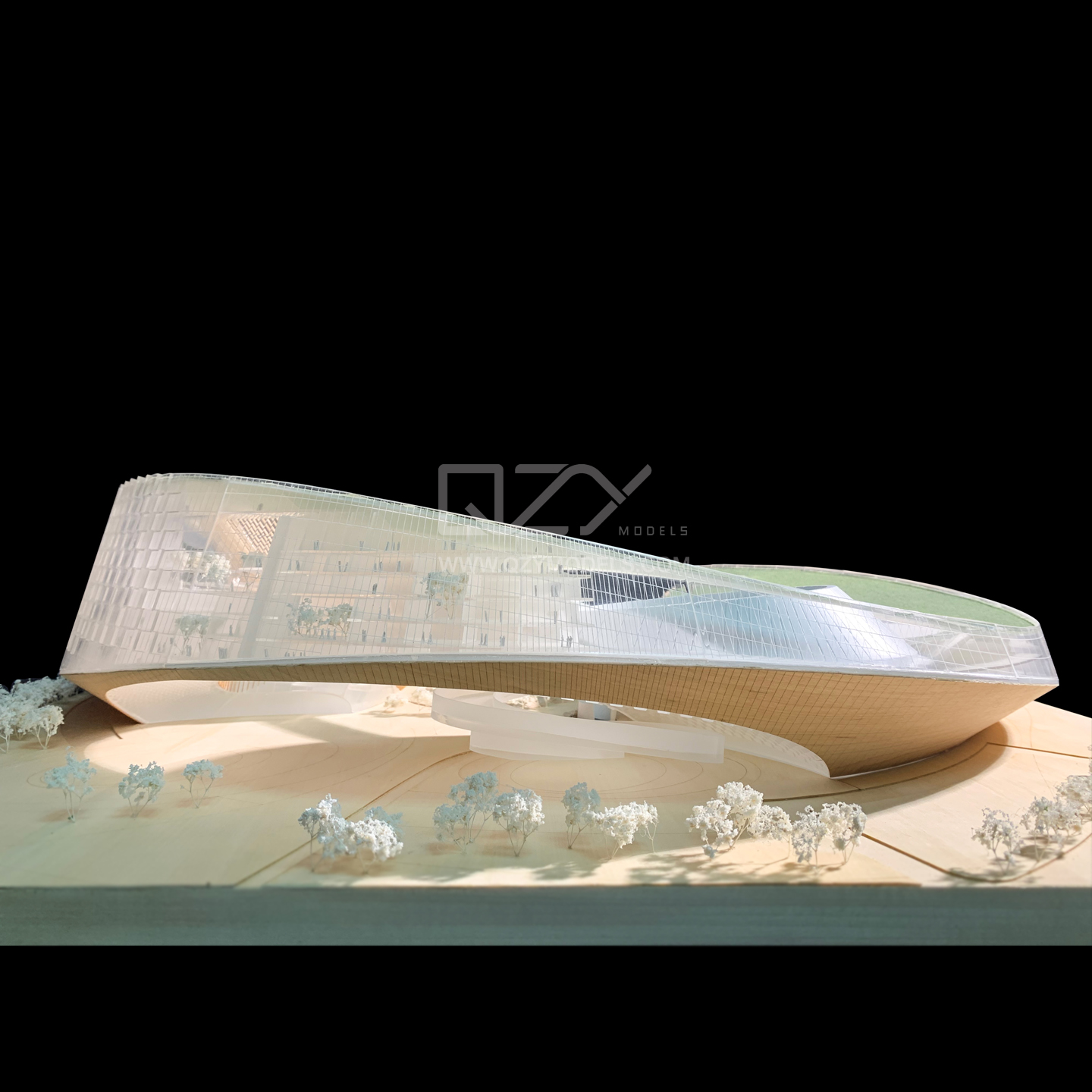
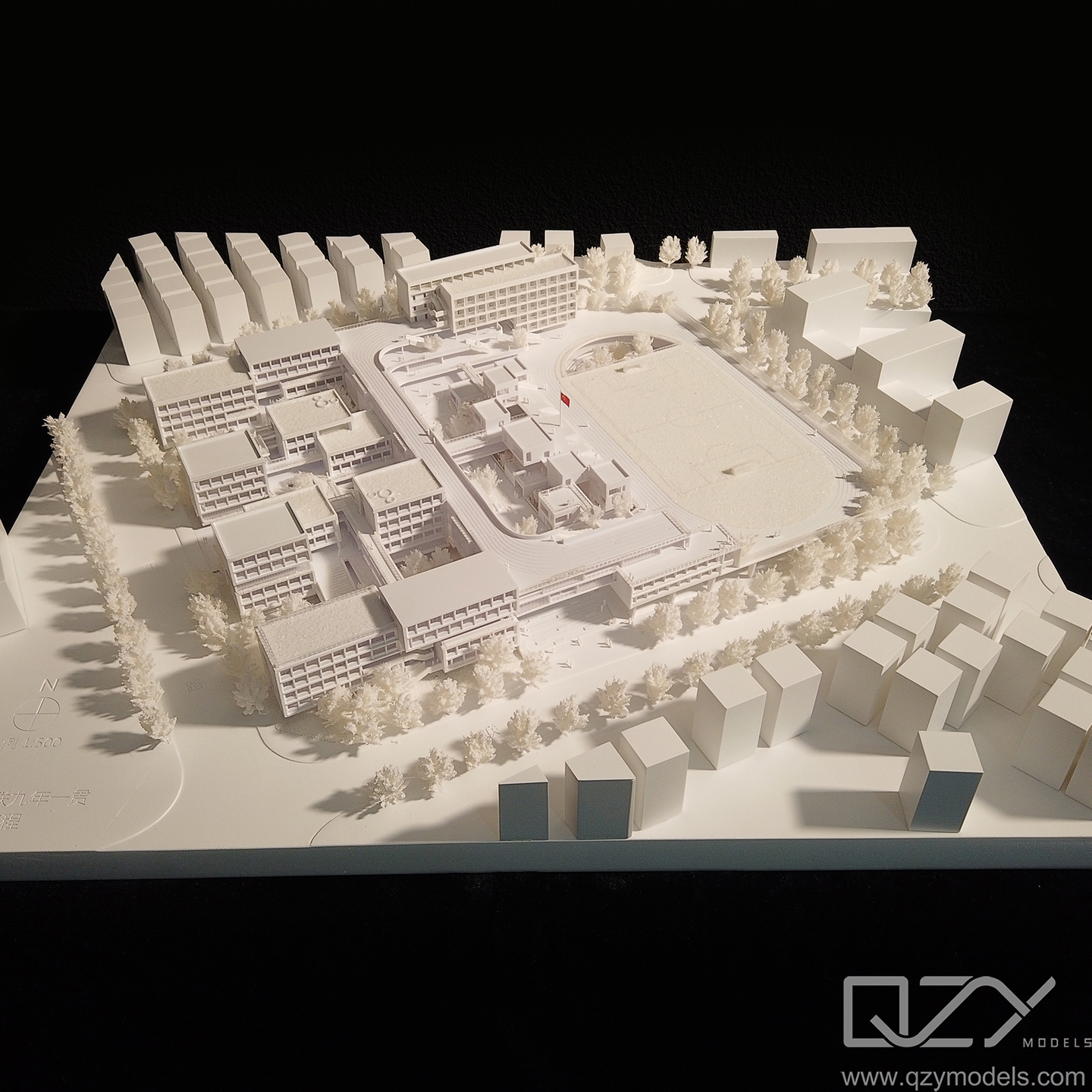
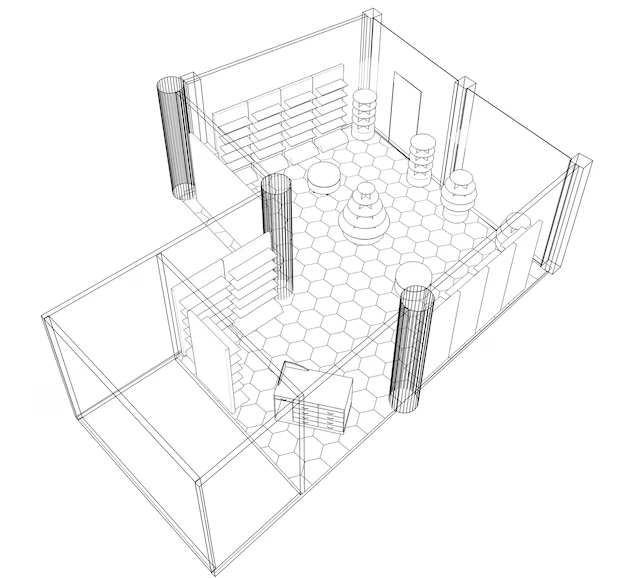
3D printed architectural models transform design by turning digital plans into precise, tangible prototypes quickly and cost-effectively. Using additive manufacturing, architects can produce detailed scale models of buildings, landscapes, and urban layouts in materials like resin or nylon. QZY Models specializes in high-fidelity outputs, combining advanced 3D printing with expert finishing to serve global clients from concept to exhibition-ready displays.
What Are 3D Printed Architectural Models?
3D printed architectural models are physical, scaled representations of buildings or sites, created layer-by-layer from digital 3D files using technologies such as SLA, FDM, or SLS. These models capture intricate details that traditional hand-built models cannot, offering architects, developers, and planners a precise visualization of structures.
Unlike foam or wood models, 3D printing allows customization of textures, colors, and scales effortlessly. Key advantages include:
-
Precision: Captures fine facades, interiors, and landscaping.
-
Speed: Produces models in days rather than weeks.
-
Cost-efficiency: Reduces material waste and labor.
QZY Models combines 3D printing with traditional finishing techniques for photorealistic results. Their Shenzhen facility handles projects from initial sketches to display-ready models, supporting scales from 1:500 site plans to 1:50 detailed buildings for clients like Foster + Partners, enhancing presentations and approvals.
How Do You Create a 3D Printed Architectural Model?
Creating a 3D printed architectural model involves modeling in software like Rhino or Revit, exporting to STL, slicing with Cura or Simplify3D, printing layer-by-layer, and post-processing with sanding, painting, or LED integration. QZY Models streamlines the entire workflow for high-accuracy results.
Workflow Steps:
| Step | Description | Tools/Software |
|---|---|---|
| Design | Build detailed 3D model including windows, landscaping | SketchUp, AutoCAD, Blender |
| Export & Slice | Convert to STL; optimize supports and infill | Cura, PrusaSlicer |
| Layer deposition; monitor defects | SLA/FDM Printers | |
| Finish | Remove supports, sand, paint, add lighting | Acrylics, Airbrush, LEDs |
QZY Models uses industrial-grade printers like Formlabs Form 4 for resolutions under 0.1mm. Post-print, skilled artisans add finishes and integrate real materials like glass or metal. This hybrid workflow reduces production time by up to 70%, ideal for developers and architects requiring rapid, high-quality prototypes for projects worldwide.
What Materials Work Best for 3D Printed Architectural Models?
Material selection depends on purpose—presentation, study, or durability. Optimal materials include:
-
Resin (SLA): Fine detail, smooth finish for facades.
-
PLA/ABS (FDM): Affordable, suitable for massing studies.
-
Nylon (SLS): Durable and flexible components.
-
Composites/PETG: Weather-resistant exteriors.
| Material | Best For | Pros | Cons |
|---|---|---|---|
| Resin | Detailed facades | High precision, smooth | Brittle, requires post-cure |
| PLA/ABS | Massing studies | Affordable, easy to paint | Layer lines visible |
| Nylon | Flexible parts | Durable, strong | Higher cost |
| PETG/Composites | Exteriors | UV and moisture resistant | Moderate detail |
QZY Models selects UV-stable resins for exhibition models and carbon-fiber filaments for industrial prototypes. Their 20+ years of expertise ensures material choices suit scale, environmental conditions, and client expectations globally.
What Are the Advantages of 3D Printed Architectural Models?
3D printed models deliver speed, cost reduction, complex geometries, and easy iterations. They provide precise scaling, minimal waste, and high-impact visuals.
Benefits:
-
Speed: Models ready in 24–72 hours.
-
Customization: Interiors, landscaping, moving parts, and textures.
-
Sustainability: Recyclable filaments, minimal material use.
-
Scalability: Small prototypes to large urban layouts.
Compared to foam carving or CNC milling, 3D printing reduces tooling costs and supports undercuts. QZY Models reports 40% faster project turnaround for clients, incorporating rapid feedback cycles. Exhibition models often include LEDs to show nighttime scenarios, enhancing investor presentations and stakeholder engagement.
Why Choose 3D Printing Over Traditional Architectural Models?
3D printing offers faster production, lower costs, higher detail, and seamless revisions. Traditional methods require labor-intensive cutting, gluing, and molding.
| Aspect | 3D Printing | Traditional |
|---|---|---|
| Time | Days | Weeks |
| Cost | Lower for small runs | High labor |
| Detail | Complex geometries | Limited by handwork |
| Revisions | Instant | Redo entire model |
QZY Models combines printing with artisanal finishing for hybrid excellence, serving high-end developers, architects, and design schools across 20+ countries, accelerating approvals and enhancing visual communication.
How Has 3D Printing Evolved in Architectural Modeling?
3D printing evolved from early FDM hobbyist printers to multi-material SLA, large-format, and full-color systems, enabling complex, large-scale models and sustainable material use. QZY Models integrates cutting-edge technologies to deliver innovative outputs for exhibitions, industrial prototypes, and urban planning.
Timeline:
-
1980s–90s: Stereolithography prototypes.
-
2000s: Affordable FDM; hobbyist adoption.
-
2010s: SLA resin adoption for architecture.
-
2020s: Binder jetting, multi-color and large-scale models.
Voxel printing, AR integration, and gantry systems allow QZY Models to create 1:100 cityscapes and interactive models for clients worldwide.
What Future Trends Shape 3D Printed Architectural Models?
Future trends include multi-material printing, AI-optimized slicing, sustainable bio-resins, and 4D shape-memory printing. Large robotic arms, VR integration, and modular city-scale printing expand design possibilities.
Emerging trends:
-
Bio-based Materials: Reduce carbon footprint.
-
Hybrid Digital-Physical Workflows: Scan-to-print pipelines.
-
Automation: AI-driven slicing.
-
Scale-Up: Large-format, modular assemblies.
QZY Models anticipates metal 3D printing for structural replicas and delivers cutting-edge models to Europe, the Middle East, and Asia, from private collectors to trade shows.
QZY Models Expert Views
3D printing has shifted architectural modeling from static boards to interactive, tactile prototypes. At QZY Models, we merge SLA precision with expert finishing to produce models that inform decisions, speed approvals, and communicate designs effectively. For developers like Vanke, our models bridge conceptual vision and reality seamlessly.”
— Richie Ren, Founder, QZY Models
Are 3D Printed Architectural Models Cost-Effective?
Yes, 3D printing can reduce costs by 40–60% compared to traditional models for complex designs. Starting prices for 1:200 scales begin at $500, with savings increasing for iterative or bulk production. QZY Models provides transparent quotes and optimized workflows to maximize efficiency.
Cost considerations include size, scale, material choice, and post-processing requirements. Resin models cost more but deliver unmatched detail, while filament models suit larger massing studies.
Conclusion
3D printed architectural models offer unmatched precision, speed, and cost efficiency, transforming design workflows. To maximize results: select materials suited to scale, combine digital and artisanal workflows for realism, and partner with experts like QZY Models. Begin with a small-scale prototype, iterate quickly, and scale confidently to impress stakeholders and secure project approvals.
FAQs
What file formats suit 3D printed architectural models?
STL, OBJ, or 3D printing-ready STEP files. QZY Models converts and optimizes formats for seamless printing.
How accurate are 3D printed architectural models?
Layer resolutions can reach 25 microns; QZY Models achieves tolerances of 0.05mm for professional fidelity.
Can 3D prints replicate real building materials?
Yes, through textured filaments, painting, and inserted components mimicking glass, wood, or concrete.
How long do 3D printed models last?
With UV-protected resins and sealants, models can last 5–10+ years.
Is 3D printing suitable for large-scale models?
Yes, modular assemblies allow 2m+ models, with QZY Models producing city-scale layouts for exhibitions and urban planning.