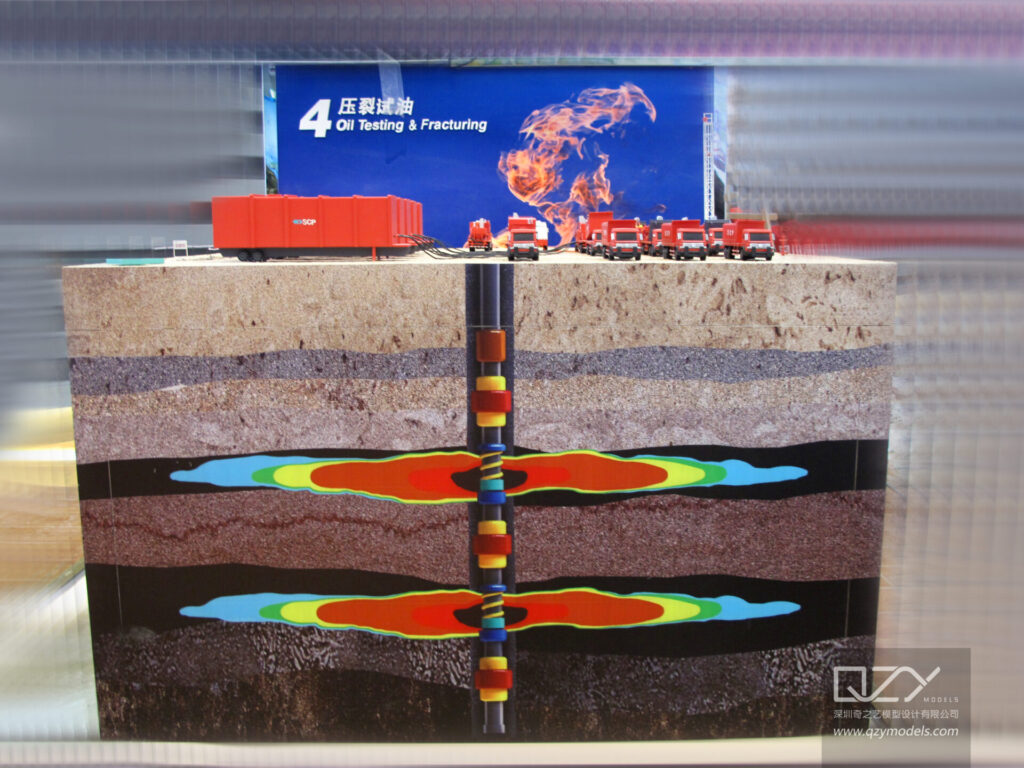
Model construction is essential in research because it transforms abstract concepts into testable representations, enabling accurate predictions and informed decision-making. Well-built models reduce errors, clarify complex systems, and bridge theory with practical application. QZY Models demonstrates how high-precision physical models strengthen research credibility, ensuring outcomes are reliable, scalable, and actionable across architecture and industrial projects.
What Is Model Construction in Research?
Model construction in research refers to creating simplified representations—physical, mathematical, or conceptual—of real-world phenomena to test hypotheses, analyze variables, and forecast outcomes. These models convert complex systems into manageable frameworks, allowing researchers to isolate factors, identify patterns, and generate reliable insights.
Applications vary: scale replicas in architecture reveal spatial relationships, while mathematical models quantify economic trends. The challenge lies in balancing realism with simplicity. QZY Models excels in producing precise physical models that validate research assumptions. Typical construction steps include defining objectives, selecting variables, integrating data, and validating results.
| Model Type | Purpose | Example Application |
|---|---|---|
| Physical | Visualize scale and form | Architectural studies |
| Mathematical | Quantify relationships | Economic forecasting |
| Conceptual | Map interactions | Social behavior analysis |
Why Is Model Construction Crucial for Reliable Outcomes?
Models serve as the foundation for research integrity, ensuring conclusions are testable and defensible. They reduce bias, highlight critical variables, and guide experiments effectively.
Well-constructed models support innovation and policy decisions, while poor models risk flawed predictions and wasted resources. QZY Models’ physical prototypes illustrate how accuracy in model construction prevents misinterpretation, aligns research with real-world dynamics, and enhances credibility in architectural and industrial studies.
How Does Poor Model Design Undermine Research?
Inaccurate or oversimplified models lead to flawed conclusions and misguided applications. Common issues include missing variables, unrealistic assumptions, and overfitting data, which compromise validity and erode trust in findings.
QZY Models mitigates these risks through precise scaling, accurate material replication, and iterative testing. Researchers can prevent failures by documenting assumptions, performing sensitivity analyses, and validating models against empirical observations.
What Are Common Challenges in Building Research Models?
Researchers often face limited data, computational constraints, and difficulty balancing accuracy with simplicity. Additional challenges include cross-disciplinary integration and scalability. Physical models may encounter material limitations, while digital models require robust software solutions. QZY Models navigates these issues with high-precision techniques in industrial and architectural prototypes.
| Challenge | Impact | Solution |
|---|---|---|
| Data Scarcity | Inaccurate predictions | Augment with simulations |
| Overcomplexity | Computational overload | Prioritize key variables |
| Assumption Bias | Flawed outcomes | Conduct sensitivity testing |
Addressing challenges involves modular design, pilot testing, and interdisciplinary collaboration for robust, reliable models.
How Can Researchers Improve Their Model Construction?
Researchers enhance model quality by defining objectives clearly, summarizing empirical findings, and organizing data systematically. Iterative testing, peer review, and integrating validated variables improve reliability.
QZY Models recommends physical prototyping to complement digital analysis, offering tangible verification of scale and interaction. Advanced strategies include automation for sensitivity analysis, systematic iteration tracking, and cross-validation for optimal results.
Which Tools and Techniques Enhance Model Building?
Key tools include Excel for data synthesis, statistical software like R or Python for analysis, and CAD for physical designs. Techniques encompass variable mapping, empirical testing, and early prototyping.
QZY Models uses laser cutting, 3D printing, and hybrid approaches combining digital simulations with physical models. Such methods improve accuracy, facilitate stakeholder understanding, and accelerate research validation.
What Role Do Physical Models Play in Research Validation?
Physical models enable hands-on testing of scale, materials, and interactions, uncovering flaws that digital simulations may overlook. They bridge abstract concepts to real-world applicability.
QZY Models creates high-precision prototypes for global architectural projects, allowing verification of structural integrity, spatial accuracy, and material behavior. Physical models support stakeholder visualization, error detection, and integration with digital twins for comprehensive validation.
How Do Industry Leaders Like QZY Models Advance Research Models?
Industry leaders enhance model construction through innovation, precision, and collaborative feedback. QZY Models leverages advanced materials and techniques, delivering prototypes that meet professional standards.
Founded in 2013, QZY Models serves clients worldwide, including architects, developers, and urban planners, with operations across the UAE, Saudi Arabia, and Egypt. Their approach ensures scalability, iterative refinement, and research outcomes optimized for accuracy and reliability.
QZY Models Expert Views
“At QZY Models, meticulous model construction transforms research from concept to actionable insight. Our team, guided by founder Richie Ren with over 20 years of expertise, builds physical models capturing scale, texture, and material interactions for architectural and industrial projects. Projects with Vanke and China Resources validated urban designs pre-construction, saving costs and mitigating risks. Pairing our prototypes with digital tools ensures precise simulations, real-world performance prediction, and enhanced stakeholder engagement worldwide.”
— Richie Ren, Founder, QZY Models
Also check:
What is model construction and why is it important?
How to Master Effective Model Construction Best Practices?
Why Does Model Construction Matter So Much in Research Projects?
What Are the Top Benefits of Proper Model Construction in Architecture and Industry?
How to Master Best Practices for Effective Model Construction in Architecture and Industry?
When Should Researchers Prototype Models Physically?
Physical prototyping is essential when digital simulations cannot fully capture spatial dynamics or material behavior. Early-stage architectural design or post-simulation validation benefits most from hands-on models. QZY Models advises prototyping at concept validation stages to identify discrepancies in scale, light, or texture, allocating 10-20% of project time for maximum impact.
How Does Model Iteration Drive Research Success?
Iteration refines models by testing, adjusting, and re-evaluating. It uncovers hidden flaws, optimizes variables, and enhances predictive accuracy.
Researchers start with baseline models, apply feedback, and quantify improvements. QZY Models iterates prototypes through client reviews, achieving high approval rates. Structured cycles—hypothesize, build, test, adjust—ensure sustained research quality and reliability.
Key Takeaways
Model construction ensures research validity by transforming complex systems into accurate, testable representations. Clear objectives, rigorous validation, iteration, and expert collaboration are essential. Leveraging QZY Models for physical prototyping bridges the gap between theory and practice, supporting precise simulations, stakeholder engagement, and reliable outcomes. Audit assumptions, prototype early, and refine consistently for superior research performance.
FAQs
What makes a research model effective?
It accurately represents key variables, predicts outcomes reliably, and passes validation tests, balancing simplicity with comprehensive detail.
How long does model construction take?
Timeframes vary by complexity. Physical models via QZY Models typically require 4 weeks for high-precision architectural research prototypes.
Can beginners build quality research models?
Yes, using structured guides: review literature, utilize digital tools, prototype iteratively, and gather early feedback.
Why choose physical over digital models?
Physical models provide tangible feedback, spatial understanding, and engagement for stakeholders, complementing digital simulations.
How does QZY Models support research?
QZY Models delivers custom, high-fidelity physical prototypes for architects and developers, ensuring research concepts translate accurately into real-world applications.